What exactly is the American Public Health Association? Is it just a conference? Can I get involved while I’m still an undergraduate? Is there any value in my getting involved? What did you present on?
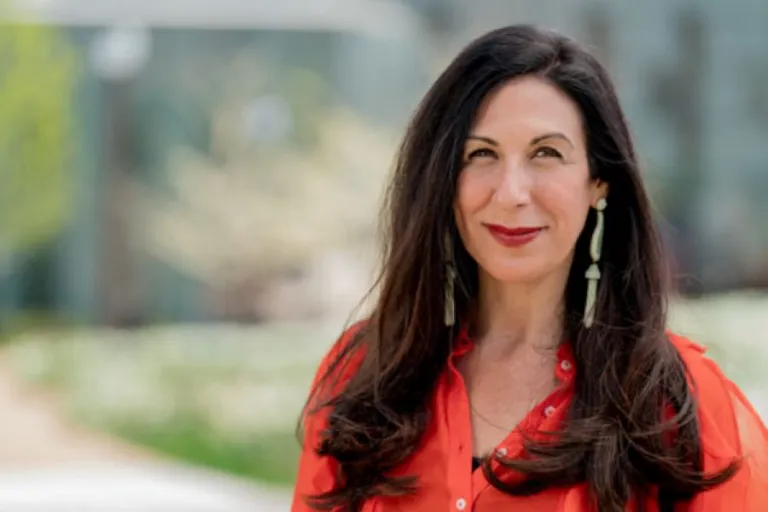
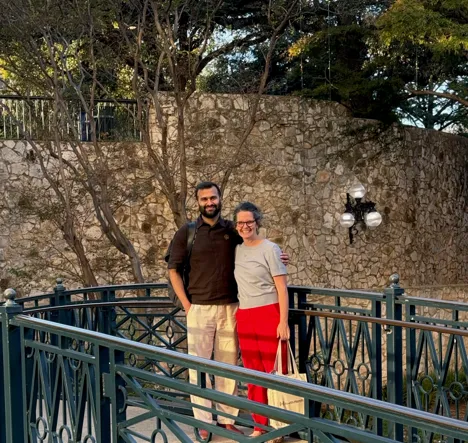
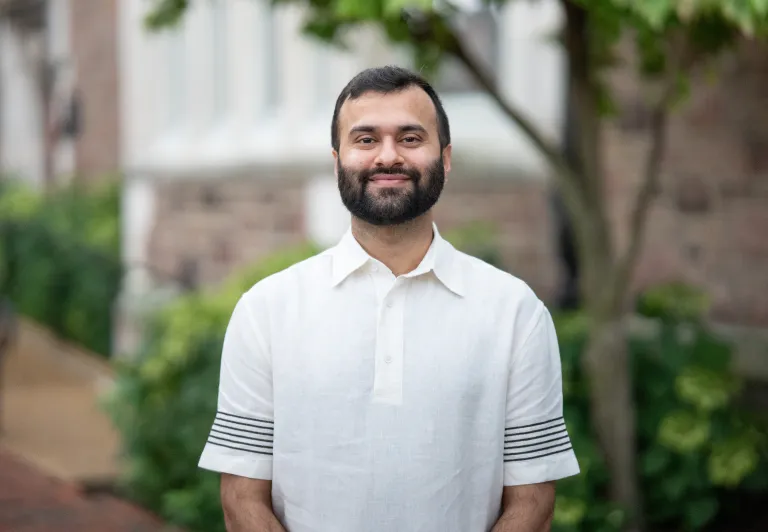
These are among the questions WashU Public Health & Society professors Bree Bode and Ans Irfan have been hearing from students since their participation in the 2026 American Public Health Association (APHA) Annual Meeting in San Antonio, Texas. The curiosity is understandable. From the outside, a national gathering of thousands of public health professionals can seem like a world reserved for those whose careers are already well underway. Yet the conference represents only a few days in the life of a much larger professional community, one that students can enter long before graduation.
With more than 25,000 members, APHA is among the country's major professional associations devoted to public health. Its work extends through scientific publications, policy advocacy, specialized professional sections, student organizations, and the governing bodies that help shape the association's priorities. Its most visible gathering, the APHA Annual Meeting & Expo, attracts approximately 11,000 attendees annually, making it the largest annual public health gathering. Researchers, practitioners, educators, policymakers, and emerging leaders (including students!) from around the world converge to present new evidence, challenge prevailing assumptions, and participate in the conversations shaping the profession.
The intellectual range was on display at the 2026 gathering, held under the theme “Together We Thrive: Health Across the Lifespan,” where questions about the dynamics of nutritional environments and programs (i.e., dollar stores, farmers markets, Food Is Medicine) were asked and also questions and philosophical critiques of the institutions and ideologies shaping public health were posed.
Professor Bree Bode contributed to three research presentations: “Improving Academic and Behavioral Outcomes Through a School-Based Food Security Intervention” and “Can Dollar Stores Be ‘Healthy’? Assessment of Internal Food Environments Across 10 States” as well as “Shaping Health Across the Life Span: Community Strategies to Reduce Childhood Sugar Intake”. The studies examine how food insecurity, school-based interventions, and everyday retail environments shape opportunities for health. Beyond her research, Bode helps shape APHA's professional community itself through her leadership: she serves as a councilor in its Food and Nutrition Section and chairs the section's Communications Committee, following an earlier appointment as a Food and Nutrition Fellow in 2020–21.
“For me, one of the benefits of being part of the APHA community is the opportunity to fully embrace my professional identify without having to go through the labor of explaining what public health is. I show up at the conference in a sea of people and do not have to talk about why public health matters, what the data and science means for advancing health outcomes, for whom the benefits of public health are, and how the work gets done effectively. This shared language and understanding is what presents opportunities for translating ideas with new, old, and current colleagues into new projects and for professional colleagues to become friends. As a student, I was a fellow of the Food and Nutrition section that made it possible for me to have the financial support to attend the conference, present my research early on in my graduate career, and network with very supportive more tenured researchers. This section, one of two I belong to, is where I engage with fellow “foodies” all year to help shape membership benefits such as developing webinars and writing policy briefs. These data driven outputs help the field advance practice and policy makers inform decisions about food and nutrition policy.”
Professor Ans Irfan brought a different set of questions to San Antonio. In “Teaching Public Health in a Dying Empire: Case Studies in Critical Fugitive Pedagogies for Health Justice,” he explored how critical theory can reshape public health education, teaching students to question the orthodoxies of the status quo, reckon with the possibility of social collapse, and cultivate the intellectual imagination to envision worlds beyond it. His second presentation, “Critiquing the Critic: Liberalism as a Structural Determinant and Threat to Health Equity,” extended this philosophical inquiry into the ideologies that govern modern life. Tracing the causes behind the causes of health inequities, climate inaction, and environmental injustice, Irfan critically examined liberalism as a prevailing political and ideological operating system whose underlying assumptions, he argues, often remain unexamined and are fundamentally at odds with public health's commitments to equity, collective well-being, and social justice.
APHA, Public Health’s Intellectual Home
The conference, however, is only one dimension of their involvement. Irfan previously served on the advisory board of APHA's Center for Climate, Health and Equity, including its inaugural cohort, and on APHA's Governing Council, the association's representative policymaking body, representing his hometown of Washington, D.C., among several other roles over the years. Alongside Bode's leadership in the Food and Nutrition Section, his service illustrates how members can help shape the institutions through which public health organizes its collective work.
Yet institutions are sustained by more than formal appointments and professional obligations. For many returning attendees, APHA's annual meeting carries the festive atmosphere of an intellectual reunion: familiar faces, unfinished debates, unexpected friendships, and conversations that continue long after the conference rooms have emptied.
“I have my critiques of APHA, as we should of any institution. An intellectual home should never demand intellectual obedience,” Irfan said. “Yet APHA remains a home of sorts for me, a place to reconnect with friends and colleagues, test old convictions against new ideas, and find intellectual companionship even amid disagreement. There is something wonderfully festive about that reunion. I often leave with more questions than answers, but also with renewed energy, fresh ideas, and a deeper sense of the work still before us.”
How Students Can Get Involved with APHA
Students need not wait for a graduate degree, a faculty appointment, or a professional title to enter these conversations. APHA offers several ways to begin, some available while they are still undergraduates. First and foremost, undergraduates can submit their own research for presentation at APHA's Annual Meeting, whether developed independently, alongside faculty mentors, or through community-engaged projects. Research studies, program evaluations, and policy analyses may be considered for oral or poster presentations, placing students' work before a national audience of scholars and practitioners. APHA has typically opened its call for abstracts in early January, with deadlines around late March. Students hoping to present at the 2027 meeting can begin preparing now, ideally with guidance from a faculty mentor, while watching for the official submission announcement.
Fun fact: You don't need to be an APHA member to submit a research abstract! If your abstract is accepted, you'll need to become a member and register for the conference to present your work, under APHA's 2026 rules. That means undergraduates can take the first step toward presenting at a major national public health conference before joining the association. Accepted presenters should also plan for membership, conference registration, and travel expenses, although some APHA sections offer limited financial assistance.
Beyond presenting research, APHA's Student Assembly, a student-led community with more than 7,000 members, offers avenues into advocacy, professional networking, mentoring, and organizational leadership. APHA student members automatically become part of the Assembly, where they can explore committee service, contribute articles, review conference abstracts, and help organize programming.
Some opportunities are available immediately. The Assembly is accepting campus liaison applications on a rolling basis. Campus liaisons connect their universities to the national student community and organize activities that bring public health conversations closer to home. Students with less time can participate in advocacy alerts, share opportunities through APHA's online community, or inquire about communications and other committee work.
Students can participate in shaping National Public Health Week events, join a caucus such as the Latino Caucus for Public Health, connect with a variety of coalitions at the Expo such as Sisters in Public Health, or participate in a Climate Justice competition.
As students advance, so can their involvement. The Student Assembly elects its own leaders and provides routes to service on APHA's governing and advisory bodies, including student representation on the American Journal of Public Health Editorial Board, Action Board, Education Board, and Science Board. These appointments follow their own selection cycles, offering possibilities to prepare for rather than positions that are continuously open. APHA's professional sections also offer opportunities for mentorship, research connections, recognition, and, in some years, scholarships supporting conference participation.
The value of such participation is difficult to capture in a résumé line. Students encounter the people who produce the scholarship they read, contribute to decisions that affect their profession, and develop relationships through which ideas are questioned, refined, and sometimes carried into practice.
The next APHA Annual Meeting & Expo will convene November 7–10, 2027, in Philadelphia. By then, a WashU undergraduate asking these questions today might be presenting a research poster of their own, meeting a future mentor, or discovering an unexpected direction for their work. The first step, however, need not wait until Philadelphia.