
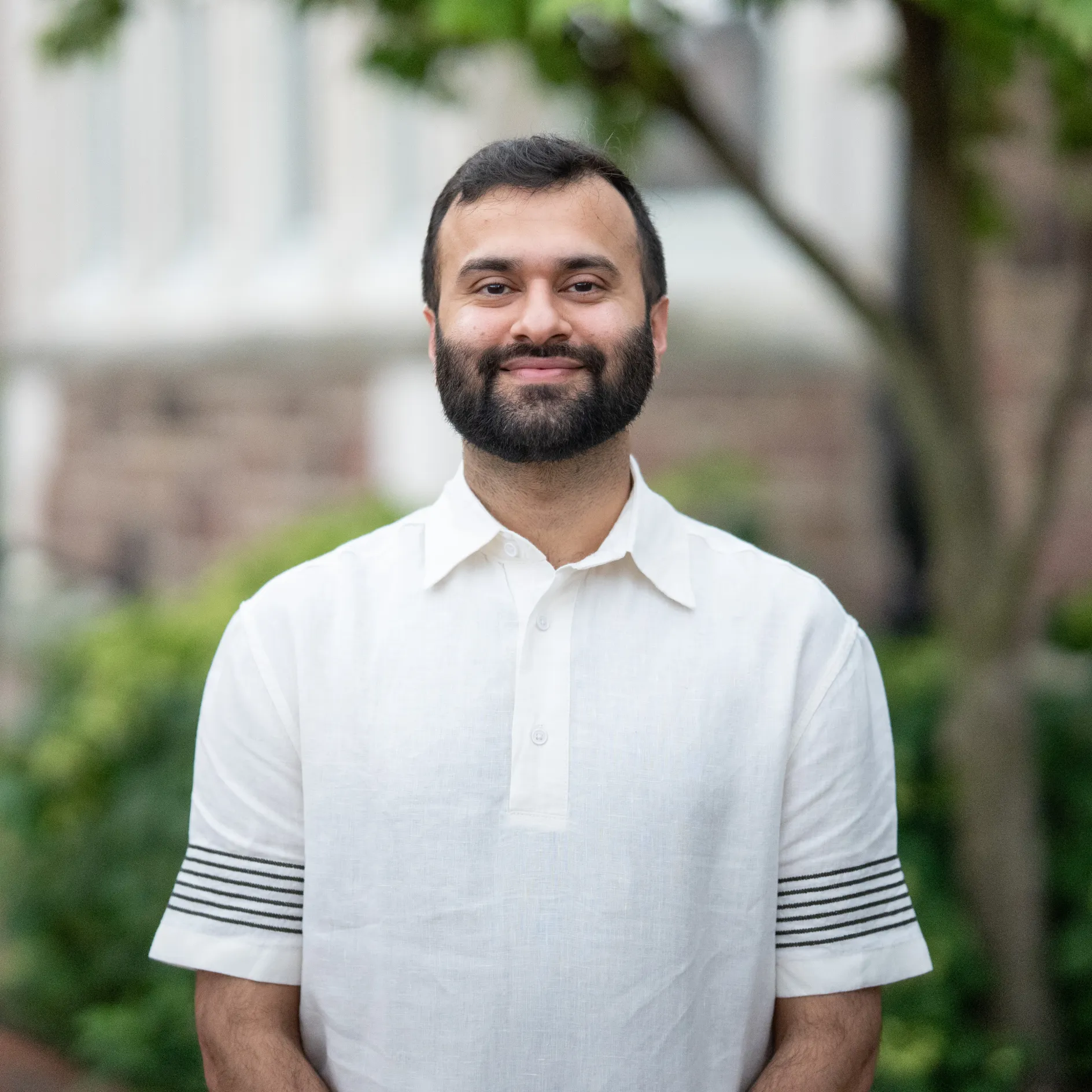
Ans Irfan

Photo of Ans Irfan

Ans Irfan

Professor of Practice, Public Health & Society
Director, The Public Health Praxis Center
MD, DrPH, EdD, ScD, MPH, MRPL, MA
research interests:
  • Public Health Practice
  • Climate and Health
  • Environmental Health and Justice
  • Higher Education; Learning Innovation
  • Learning and Development
  • Public Health Leadership
  • Global Health Systems
  • Worker Health
  • Decolonial Theory and Praxis
  • Critical Theory
  • American Imperialism
  • Religion and Public Health
  • Political/Moral Economy of Public Health
  • Thanatology (Death Studies)
  • Social Equity
  • Health & Science Policy
View All People

contact info:

mailing address:

  • Public Health & Society
    MSC 1310-257-265
    Washington University
    1 Brookings Drive
    St. Louis MO 63130-4899

Professor Ans Irfan is a public health pracademic, educator, and multidisciplinary scientist with more than two decades of experience advancing health equity across domestic and international contexts. His work spans the United States, Pakistan, China, and Portugal, integrating global experience with a systems-level understanding of how public health knowledge becomes public health practice. His scholarship and leadership center on health equity, climate and health, social policy, technology, and learning innovation.

His scholarship and practice bring together climate justice, global health, environmental and occupational health, health policy, migrant health, decolonial theory, sociocultural anthropology, organizational change, implementation science, program development, and program evaluation. Grounded in mixed-methods inquiry and shaped by the realities of practice, his work focuses on designing public policy and programmatic interventions that address the structural conditions driving social and health inequities.

Dr. Irfan is the founding director of The Public Health Praxis Center, an applied public health ecosystem devoted to research translation, leadership development, capacity building, and science communication. Through the Center, he has developed programs that prepare scholars, practitioners, and institutions to turn science into social impact. These include the Praxis Fellowship, the Science for Social Impact Award, and the Inclusive Health Equity Literacy Scholarship. His global initiatives have included the ClimatexHealth Technical Assistance Initiative, which supports climate-health adaptation work, and the Climate & Health Equity Practice Fellowship, a pioneering program that develops climate and health leadership among physicians in the Global South.

Beyond the academy, Professor Irfan has advised and collaborated with national and global institutions on climate and health equity, environmental health, evidence-informed policymaking, science translation, and public health capacity building, including UNESCO’s Inclusive Policy Lab, the American Public Health Association’s Center for Climate, Health & Equity, the Environmental Protection Agency, and the National Academies of Sciences, Engineering, and Medicine. He also serves as a Fulbright Specialist, a CFR Higher Education Ambassador with the Council on Foreign Relations, a Senior Fellow with the Agents of Change in Environmental Justice Fellowship, and a climate expert with the Lancet Countdown U.S. Brief Working Group. He has also served as a Climate Security Fellow with the Center for Climate & Security at the Council on Strategic Risks.

His science-policy experience includes service as a Christine Mirzayan Science and Technology Policy Fellow at the National Academy of Sciences, where he contributed to consensus studies on sexual and gender minority well-being, rising midlife mortality (‘deaths of despair’), and socioeconomic disparities. He also co-led an institutional diversity, equity, and inclusion assessment initiative at the Academies. He is a former Robert Wood Johnson Foundation Health Policy Research Scholar, an affiliate of Harvard Innovation Labs and the Harvard Climate Entrepreneurs’ Circle, and a founding member and former Policy & Programming Director of the National Association for Doctors of Public Health. His recent work also includes service as a Social Science Fellow in Education and Workforce Development with the U.S. Department of Energy, through the Oak Ridge Institute for Science and Education Policy Fellowship program.
Courses

Foundations in Public Health

This course examines the foundations in public health using an equity and social justice approach emphasizing the interconnectedness of population and individual health. The course will cover the history and impact of public health, including the importance of health equity, social justice, and human rights, as well as the essential role of ethics in public health. The course will expose students to various public health professionals working on inter-professional teams to explore careers in public health, we will invite public health and community health experts from the St. Louis region as well as national and international guest speakers.

APEX: Advanced Practical Experience in Public Health Seminar

This Advanced Practical EXperience in Public Health (APEX) course bridges the gap between public health theory and skills, providing students with the practical knowledge and experience needed for real-world public health engagement. Students will enhance their skills and knowledge through activities such as community-based research, developing health interventions, assessing community health needs, and program evaluation. Students may also collaborate with community-based organizations to address public health challenges, preparing them for the realities of public health practice.

Recent Publications:

Lokmic-Tomkins, Z., Abadi, A., Benmarhnia, T., Chen, K., Chong, K. C., Conte Keivabu, R., Dasgupta, S., Estallo, E. L., Guo, J., Hashizume, M., He, C., Herrmann, A., Irfan, A., Kovats, S., Li, S., Males, J., Navas-Martín, M. Á., Paz, S., Qureshi, A., ... Wheat, S. Climate and health at a critical juncture. PLOS Climate, 5(4), doi.org/10.1371/journal.pclm.0000895 (2026)

Edwards, J. G., Russ, C. M., Alayande, B., Dela Rosa, J. G., Dogar, M., Fitzgerald, T. N., Gonzalez, P., Irfan, A., Olufadewa, I. I., Rivera-Segarra, E., Siegel, E., Williams, M., & Ratner, L. (2026). Assessing content validity of learner milestones for decolonial global health education: A modified Delphi study. PLOS Global Public Health. doi.org/10.1371/journal.pgph.0005016 (2026)

Withers M, Pernet O, Burke RV, Kumar S, Patino-Sutton C, Irfan A. From Theory to Practice: Case Studies on Implementing Active Learning in Public Health Education. Pedagogy in Health Promotion. 0(0). doi.org/10.1177/23733799261426017 (2026)

Park, C., Delgado, C., Irfan, A. Perspectives on the Doctor of Public Health (DrPH) education among students and alumni in the United States: a cross-sectional national online survey. BMC Public Health 23, 1558 (2023). doi.org/10.1186/s12889-023-16402-3 (2023)

Irfan, A., St. Jean, D.T. COVID-19 & Sociocultural Determinants of Global Sanitation: An Aide-Mémoire and Call to Decolonize Global Sanitation Research & Practice. Annals of Global Health. DOI: doi.org/10.5334/aogh.3358 (2021)

Golembeski, C., Dong, K., Irfan, A., Carceral and Climate Crises and Health Inequities: Causes and Consequences of Structural Racism and Economic Deprivation. World Medical & Health Policy. doi.org/10.1002/wmh3.382 (2021)

Irfan, A., Bieniek-Tobasco, A., & Golembeski, C. (2021). Pandemic of Racism: Public Health Implications of Political Misinformation. Harvard Public Health Review (HPHR), 26, 1–7. jstor.org/stable/48617321 (2021)