Public Health & Society is excited to announce that we have added a new destination to our list approved study abroad programs: Hong Kong!

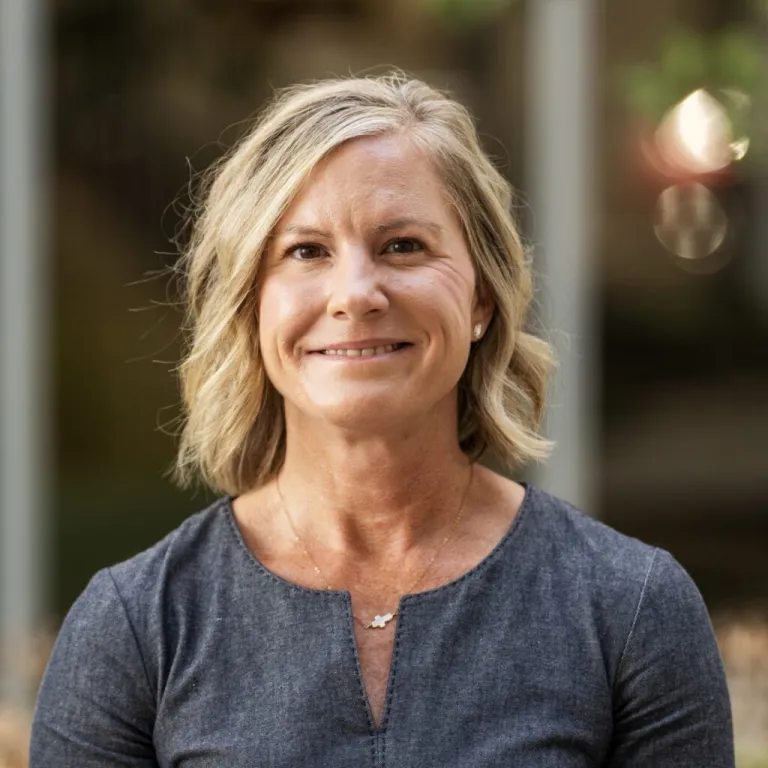
We thought this would be a great time to sit down with Dr. Kristin Brig-Oritz, Director of Undergraduate Studies (DUS) for Public Health & Society to learn more about study abroad.
If someone wants to study abroad, where do they start?
The first thing that students need to figure out is where they want to go and how they're going to do that with Public Health & Society. WashU has a lot of different study abroad programs that are offered through different majors. Our approved programs prioritize our students.
Then, they need to meet with the DUS (me) to talk about what their study abroad plan looks like and what courses are going to transfer back to their major. At roughly the same time, they need to meet with the coordinator for the program they’re interested in with the office of Overseas Programs.
Once that is all sorted out, they fill out the application for the desired program(s). Additionally, they will need a pre-approval form from me and from other majors or minors on campus where they want courses to transfer back to. As they go through this process, they need to make sure they have at least one person they can ask to be a recommender for the application, because the application itself is important. You don't want to ask someone at the last minute to write that recommendation for you.
What types of classes typically count towards the major and minor?
If you're a major, you can bring back up to six credits of elective credit. If you're a minor, you can bring up to three credits back. Typically, the courses that you're going to be bringing back are health centered. Most of the course titles that I see from study abroad programs that transfer back have health somewhere in the name, so that's a good tip off that it's going to be an elective that you can bring back.
The caveats that I will give are first, none of the courses that you can bring back can count as our core courses. We’ve had some students ask if they can take their research methods course in a study abroad program. We teach a lot of stuff in our research methods course that's specific to our program and can't be replicated elsewhere.
The other caveat is most of the courses that come back are at the 3000 level. I don't think that's particular to Public Health & Society. If you want something to come back as a 4000 level, it needs to be a super niche class, and you also need to submit more documents for that, including the full syllabus for that course.
What are some common misconceptions students have about studying abroad?
I can think of two. First, “spring is better than fall.” Is it because you have a very specific four-year course plan and so spring is legitimately the best time for you to go? Is it because of weather concerns? Or do you want to go in the spring because most people go in the spring? It’s entirely possible to go in the fall, and sometimes it's actually a great thing to go in the fall. It’s a lot less competitive to go in the fall too. There are also summer opportunities that students forget exist.
The other misconception is “I can only do a Public Health & Society approved program because that’s my major.” We have a lot of students who are double majors or are minoring as well. For instance, if you’re double majoring in Biology, you can go through a Biology-approved program. Then you work with me to figure out what courses will transfer back towards your Public Health & Society major.
If you want to do a program that is not supported by any of your majors or minors (and we have students who do), you can certainly try. The upside of going with an approved study abroad program with Public Health & Society or another major or minor that you have is that you have priority to get into that program. You also need to do a little more paperwork.
Do you have advice for a student who is considering studying abroad but does not know where to start?
- Think about the semester you want to go abroad. Do you want to go in fall? Do you want to go in spring? Do you want to go in summer? There are some programs that only happen during the academic year or only happen during the summer. Or, for instance, the Chile program is mostly English speaking in the fall but is fully immersive in Spanish in the spring.
- Think about the geographic area where you want to be located. Is there a particular continent you’re interested in? How about a culture and society?
- Think about language needs. Is English the only language you know? Once you've settled on a place that you want to go, brush up on that language a little bit. If you want to go to Copenhagen, learn some basic Danish. If you want to go to Kenya, learn some basic Swahili. Not only is that going to show the people in those countries that you are willing to learn and be a part of their community; it's also just helpful for getting around- especially in spaces where English is not on a lot of signage.