The first cohort of APEX students has completed projects ranging from community health outreach to accessible public health communication. Their work demonstrates how experiential learning empowers students to support organizations, address real needs, and better understand careers in public health.
What is APEX?
APEX (Advanced Practical Experience in Public Health) is what we at Public Health & Society call the internship that is required for all our majors. The internship can be with a community organization or it can be a directed research project.
Why are internships important? Internships give you an opportunity to work outside the classroom and apply what you have learned in the real world. Working with your partnering organization will give you a look into what working in a career looks like - do you like this type of work? Did you work with someone who has an interesting role? You also get a chance to practice skills such as professional communication, collaboration, and time management. Internships are helpful beyond just how good they look on your resume (you should still put it on your resume, though).
One of the best aspects of APEX is that we will help you find the internship. Our APEX Coordinator will do the hard part for you.
Our first group of APEX students just completed their projects. Here are some examples of their work:
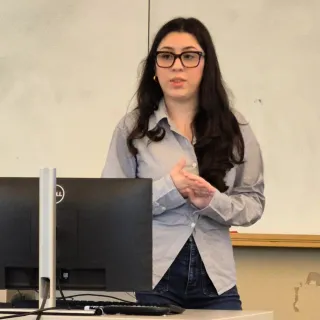
Brianna Ayala - IFM Community Medicine
Brianna reached out to over 80 community organizations to make them aware of IFM Community Medicine's services and tabled at two events to reach out directly to community members. She said the outreach component of public health is particularly important because "you have meet individuals and organizations where they are at." Brianna speaks Spanish and was able to engage directly with Spanish-speaking community members. She emphasized the importance of creating materials written in the language people understand. In general, reaching out community members and the organizations they are already a part of is crucial to getting people access to healthcare. "Individuals are not always aware of healthcare resources."
Srikar Vegesna - Oasis Institute in St. Louis
Srikar started by mapping out Oasis's referral network, both what organizations they refer people to and who refers people to them. This map is an ongoing process as the list of referral organizations is constantly changing. He also conducted a survey of the older adults who participate with Oasis. "This is my first time working in a non-profit public health setting." He said that it was "insightful to see how community development really works" and how to "work with the community to provide for the community."
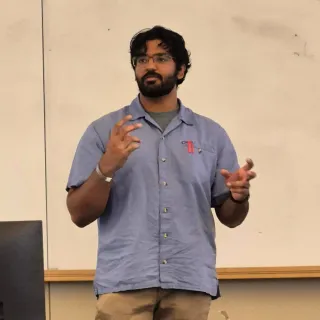
Faizan Noorani - Department of Health and Senior Services (DHSS) Substance Use Disorder Division
Faizan started with this scenario: "imagine your loved one just came home from surgery with a new pain medication, would you read a 12-page guide on best practices?" Faizan's project was to create a new, easier to read guide and submit it to the Office of Public Information. He also turned that new guide into an infographic- making the guide shorter, clearer, and keeping it at a more accessible reading level. He stated that "a resource is only effective if it is clear enough and practical enough to use in day-to-day life."